
Growing Facades: Large Format Robotic Clay Printing for Bio-Integrated Architecture
Workshop Dates: 10/19 - 10/21
Location: University of Michigan, Ann Arbor Address: 2000 Bonisteel Blvd, Ann Arbor, MI 48109
Workshop Team
Rachael Henry, University of Michigan School of Architecture and Urban Planning, instagram
Nick LiCausi, Tulane School of Architecture and Built Environment, instagram
Oliver Perry, Newcastle University School of Architecture, Planning and Landscape, instagram
Dan Batty, Newcastle University School of Natural and Environmental Sciences, instagram
Workshop Consultants
Tsz Yan Ng, University of Michigan School of Architecture and Urban Planning, instagram
Adam Marcus, Tulane School of Architecture and Built Environment, instagram
Jane Scott, Newcastle University School of Architecture, Planning and Landscape, instagram
Programming Support
Wes McGee, University of Michigan School of Architecture and Urban Planning
Registration: Regular - $325, Student - $165
Registration
Workshop Description
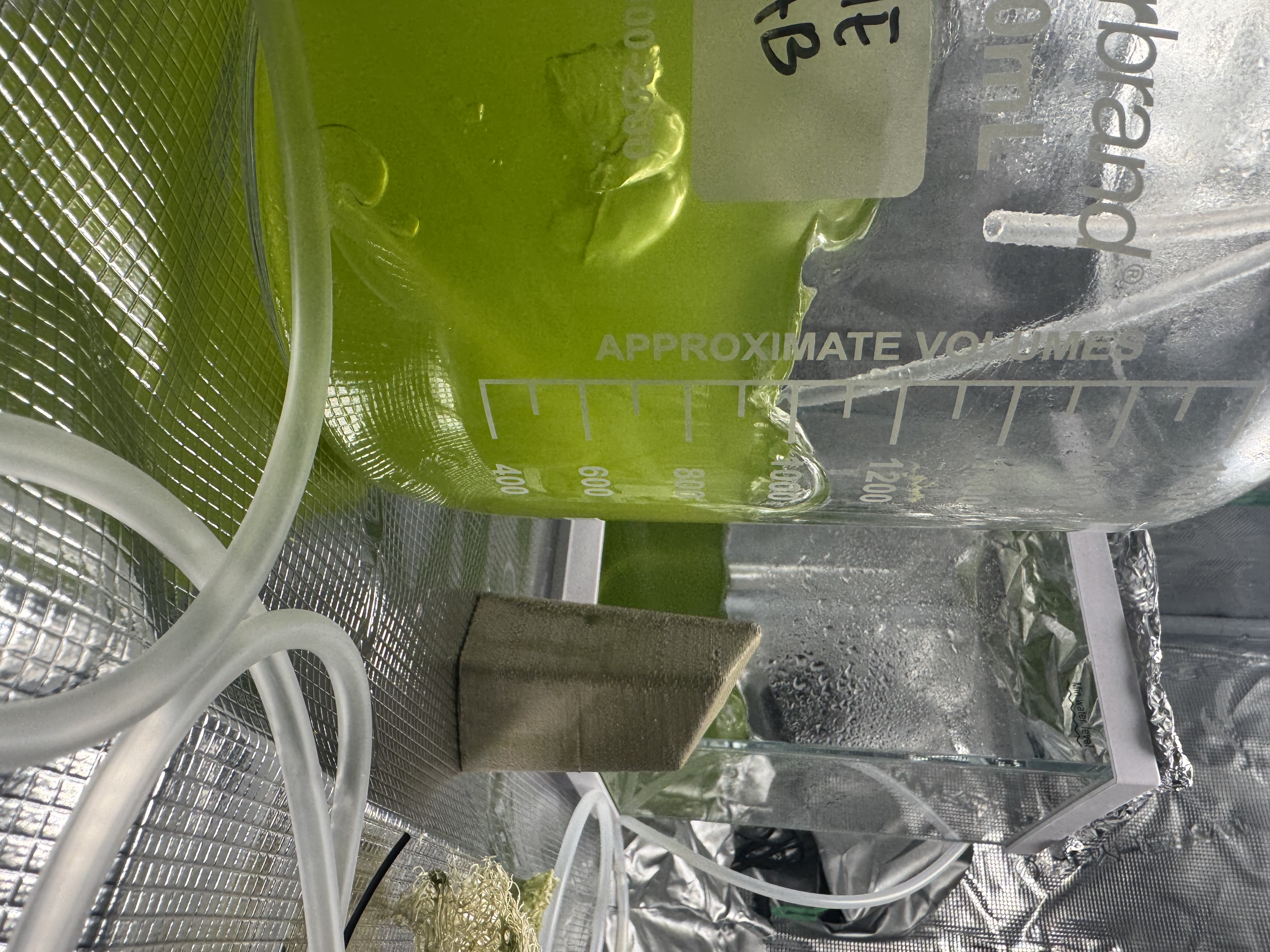
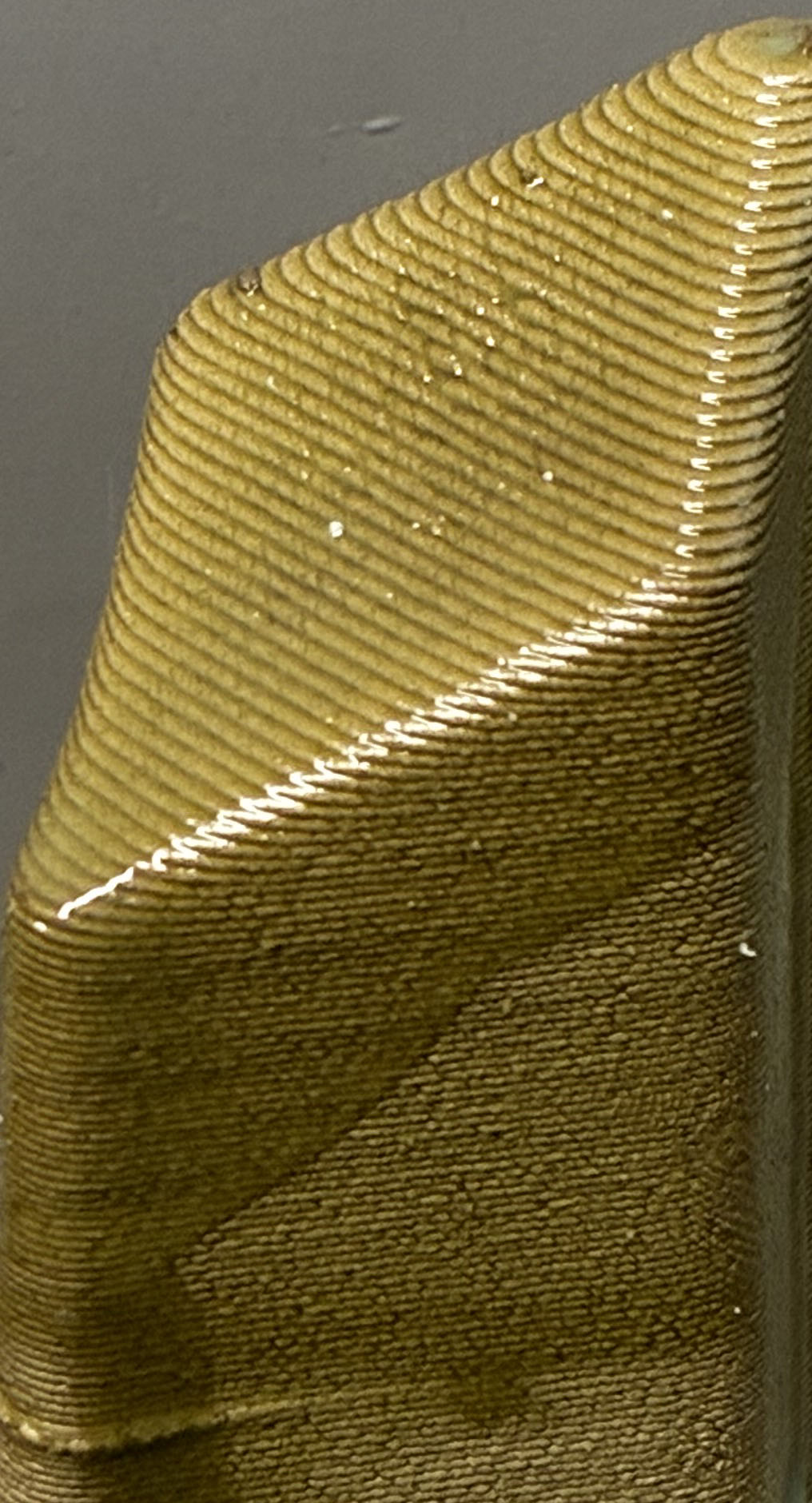
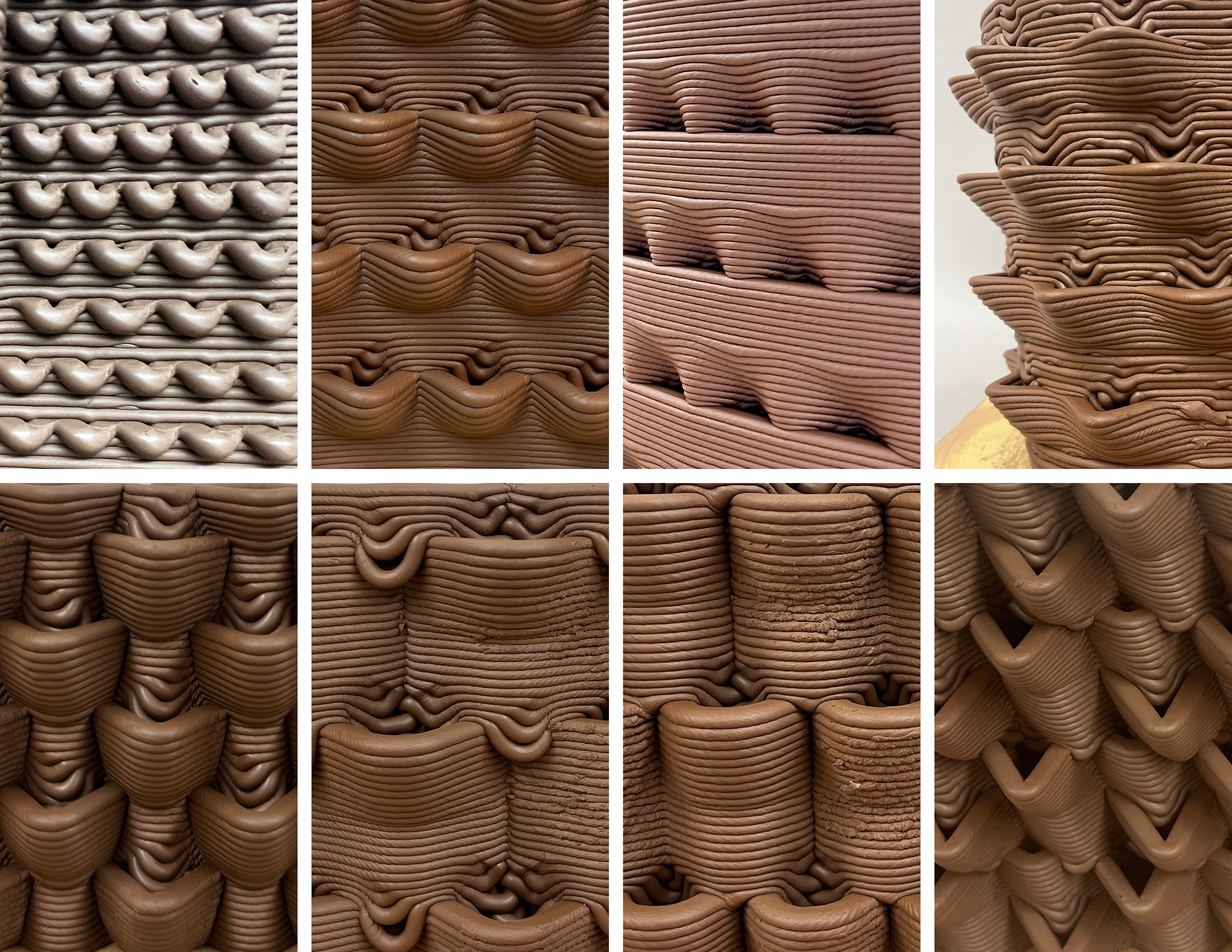
This workshop will explore large-format 3D printing of bioreceptive ceramic building components, focusing on integrating biomaterials, material knowledge, and fabrication. Participants will be introduced to the basics of clay composites, biotech for the built environment, material preparation, and robotic extrusion. Workshop attendees will mix and test clay bodies with various additives, then evaluate their printability and test their potential to support biological growth.
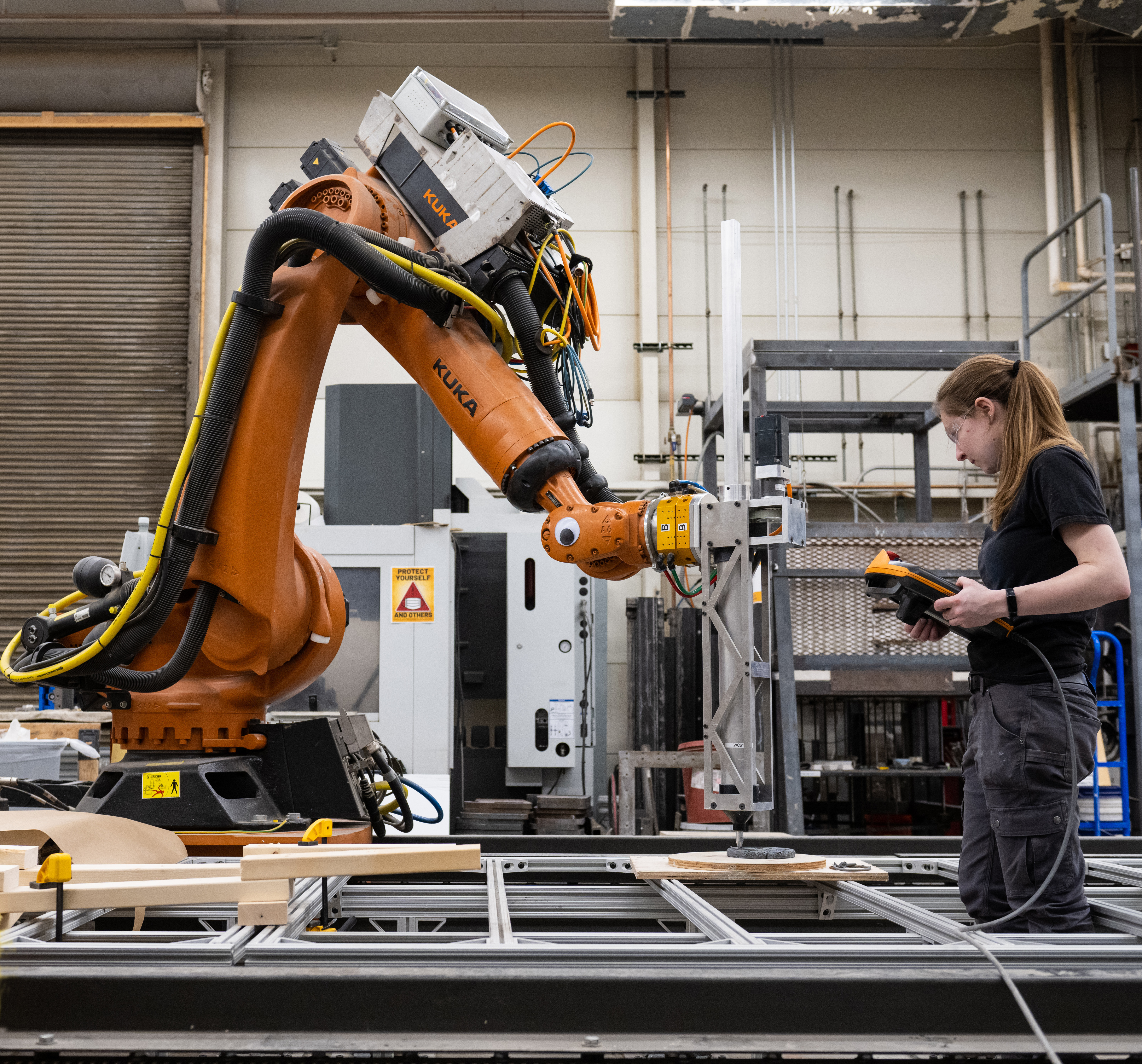
The first session of this workshop will be held remotely via Zoom on October 10th to introduce participants to custom toolpathing scripts developed in Grasshopper, exploring techniques such as surface geometry, texture, and infill. They will develop proposals for full-scale prototypes to be fabricated at the University of Michigan FABLab using a KR120 robotic arm, equipped with a custom clay extrusion system during the in-person portion of ACADIA’s workshop period.
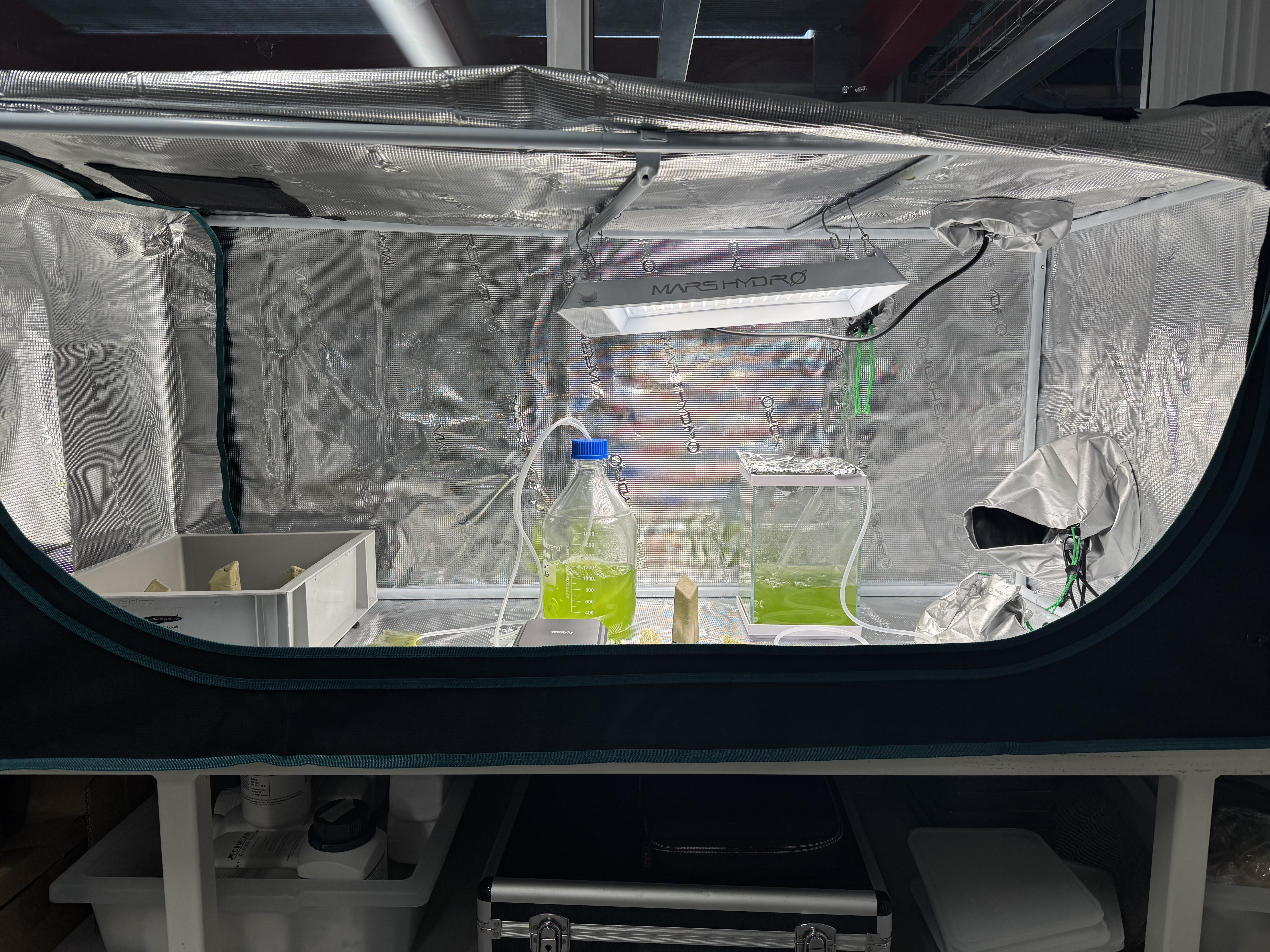
The in-person session will be hosted at the U-M FABLab, using the established infrastructure to facilitate the work. Participants will focus on fabrication and prototyping, gaining hands-on experience with material preparation and robotic printing workflows. They will work in pairs to print ceramic 3D-printed modules, to learn how to prepare surfaces for algae incorporation, and calibrate various environmental conditions to optimize growth. The accelerated drying process will ensure components printed during the workshop will be ready for display by the end of the conference at LTU. At the end of the workshop, fabricated elements will be installed and monitored as test substrates for biological growth. This extended phase will support ongoing evaluation of material performance and bio-receptivity.
Workshop Schedule
Pre-workshop Session - Workshop Intro (October 10, Zoom/asynchronous)
- Workshop Overview
- Introduction to Rhinoceros and Grasshopper Scripting for Robotic Ceramic 3D Printing
- Introduction to Biomaterials
Day 1
Time: 10:00 am – 5:00 pm (w/ 1-hour break)
- Taubman Lab Safety and tour of Taubman College’s FabLAB
- Algal culture handling and biosafetyGrasshopper review, Q+A, and discussion of designs
- Module design development
- Preparation of algae mix and grow lab setup
- Demo of surface application
- Application of Algae to pre made modules by dipping, coating and other techniques
Day 2
Time: 10:00 am – 5:00 pm (w/ 1-hour break)
- Overview of printing process
- Material preparation demos and instruction
- Participants loading clay, understanding material to tool relationships (printing parameters), and working directly with the extruder tool
- Continue design development
- Clay printing / monitoring algae Growth, continue to apply algae to panels
Day 3
Time: 10:00 am – 5:00 pm (w/ 1-hour break)
- Printing continues
- Fired modules taken to LTU and attached to frame
- Project documentation and video editing
- Workshop presentation
Total Workshop Time: 18~20 hours over 3 days
Participant Information
- Audience: Students, researchers and professionals in architecture, design, and digital fabrication/construction
- Skill Level: Intermediate. Prior knowledge of Rhino/Grasshopper preferred
- Group Size: ~12 participants
- Hardware: Laptop with Rhino 7 or Rhino 8 with Grasshopper
- In-person dress code: closed toe shoes (per OSHA requirement), other safety equipment will be provided during the in-person workshop
Workshop Gallery

.jpg "PXL_20260506_171450833 (1)")
Refund and Change Policy
Important: Refund and change requests will not be accepted beyond Monday, October 5th.