
Organized Tours
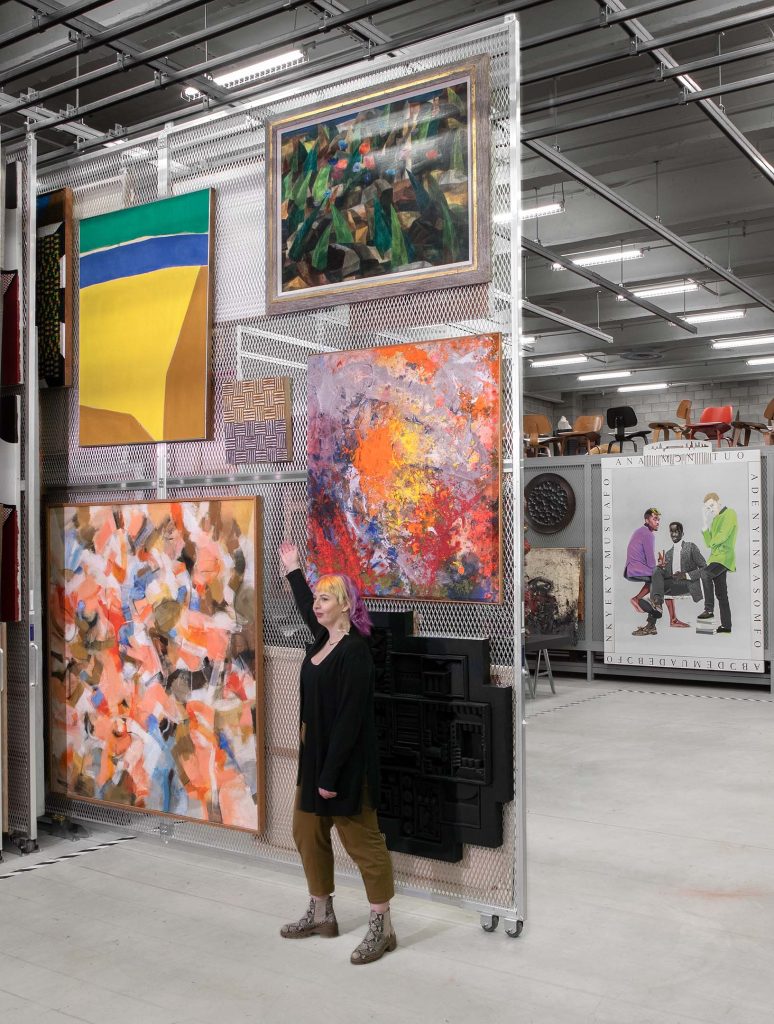
Cranbrook Art Museum Collections Wing Tours
LIMITED AVAILABILITY ADVANCE RESERVATION ONLY
- 39221 Woodward Ave. Box 801 Bloomfield Hills, MI 48303 Google Maps Link
- Wednesday, October 21st, 4:00-5:00 pm. Limited to 20 persons per tour.
- $30 per ticket. Registration Link
Exclusive Behind-the-Scenes Collections Wing Tour: See a selection of the 8,000+ items in Cranbrook Art Museum’s extensive collection. The first stop is the Ceramics vault. On view are pieces by Cranbrook ceramicists including Maija Grotell, John Glick, Richard DeVore, Anders Ruhald, and Toshiko Takaezu as well as others who have shaped the medium including Peter Voulkos, and an array of Pewabic pottery.
Next, visit the Plaza Vault where you’ll learn how Cranbrook Academy of Art became the nexus of mid-century modern American design with works by artists such as Charles and Ray Eames, Ralph Rapson, Harry Bertoia, Don Knorr, Gere Kavanaugh, Eliel and Eero Saarinen, and Pipsan Saarinen Swanson. Then, explore the continuing legacy of design with contemporary pieces by Vivian Beer, Chris Schanck, Jay Sae Jung Oh, Nina Cho, and Ara Thorose.
The Plaza Vault is also home to an array of sculptures and textiles by artists such as Nick Cave, Duane Hanson, Harry Bertoia, Anthony Caro, Ruth Adler Schnee, and Olga de Amaral. Paintings collected from modern and contemporary painters from the twentieth and twenty-first centuries such as Andy Warhol, Agnes Martin, Louise Nevelson, Robert Motherwell can viewed alongside Cranbrook artists such as Cranbrook Academy of Art Artists-in-Residence Zoltan Sephesy and Donald Willett and alumni including Artis Lane, McArthur Binion, Marianna Olague, Conrad Egyir, and many more.

The Affleck House
- Sunday, October 25th, 10:00-11:00 am. Limited to 15 persons per tour. Additional time slots may open if filled.
- 925 Bloomfield Woods. Bloomfield Hills, MI 48304 Google Maps Link
- $40 per ticket. Registration Link
The Affleck House, designed by Frank Lloyd Wright, is one of Michigan’s significant examples of Usonian residential architecture.
Owned by Lawrence Technological University and supported by the Donley Fund, the house continues to serve as an educational and cultural resource.
The first Frank Lloyd Wright-designed house to be built in the Detroit metropolitan area, the Gregor S. & Elizabeth B. Affleck House represents one of the finest examples of the architect’s Usonian style, the last great period of Wright’s career. Designed to exist in harmony with the home’s site and nature, the Affleck House was a part of Wright’s attempt to meet the need for low-cost housing for the average American.