Creative Engine:
Workshop Dates: 10/19 - 10/21 (3 Morning Sessions)
Online
Workshop Team
Gwyllim Jahn, Runchat CEO, Fologram Co-Founder, RMIT Lecturer, instagram
Registration: Regular - $175, Student - $90
Registration
Workshop Description
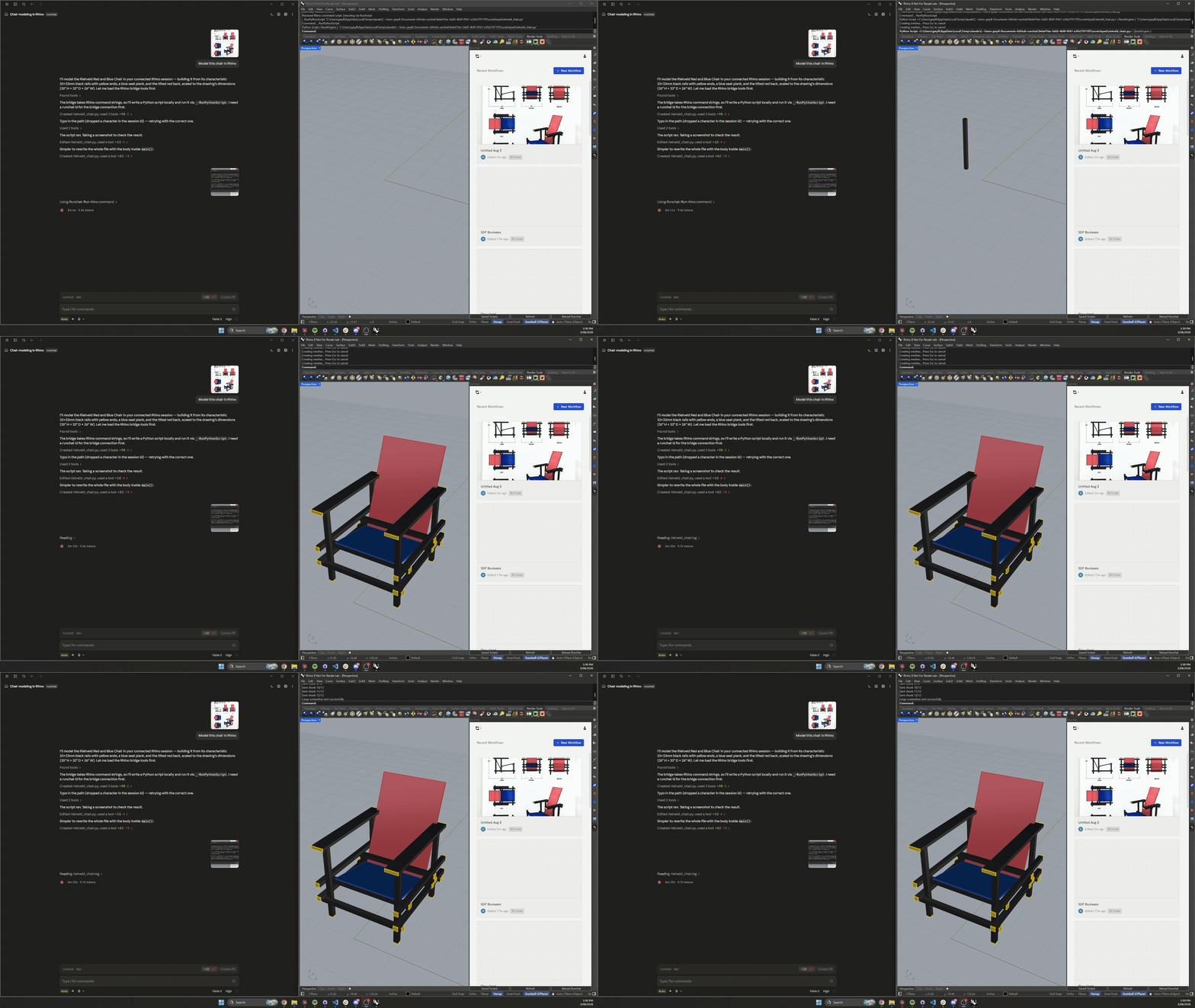
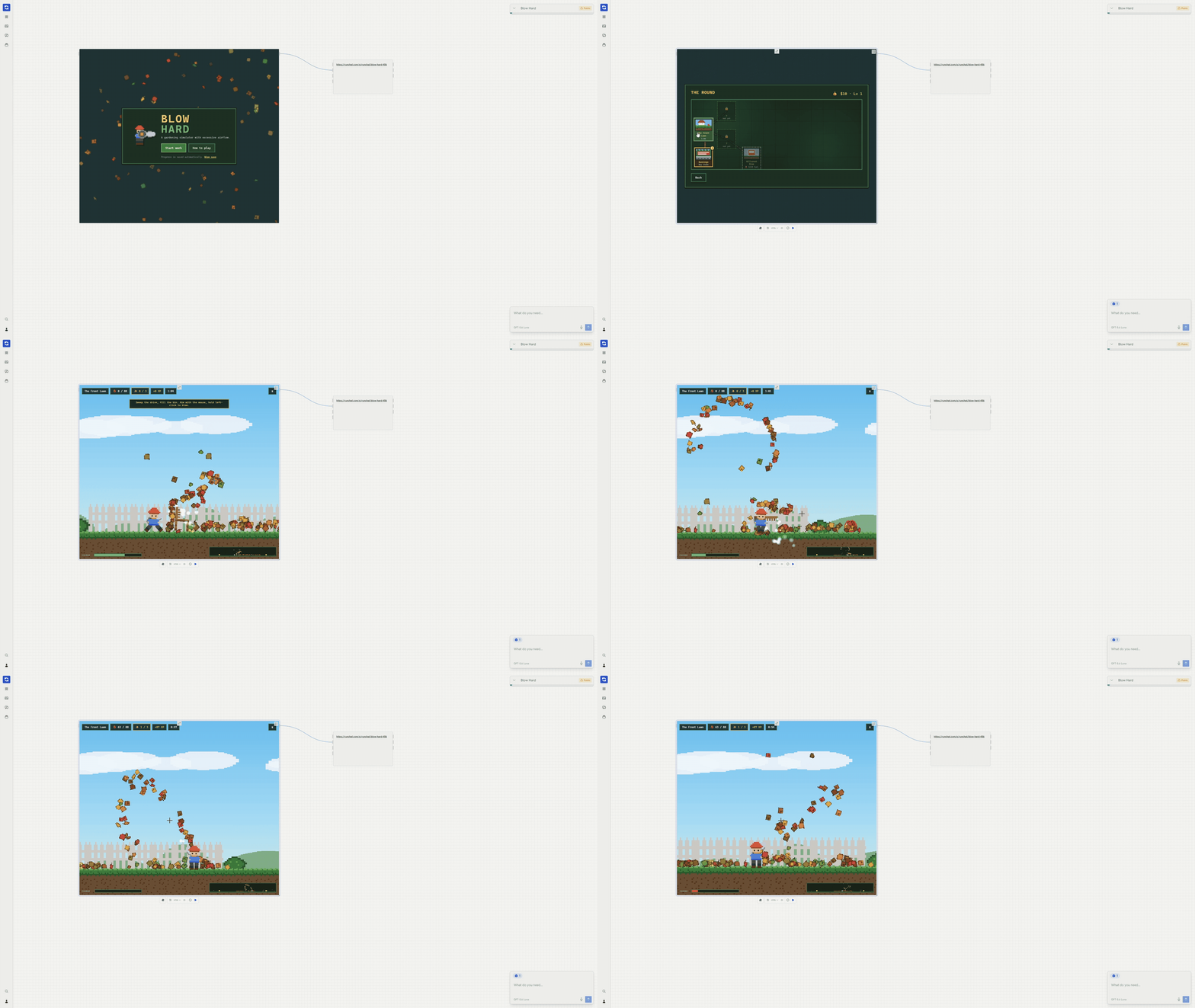
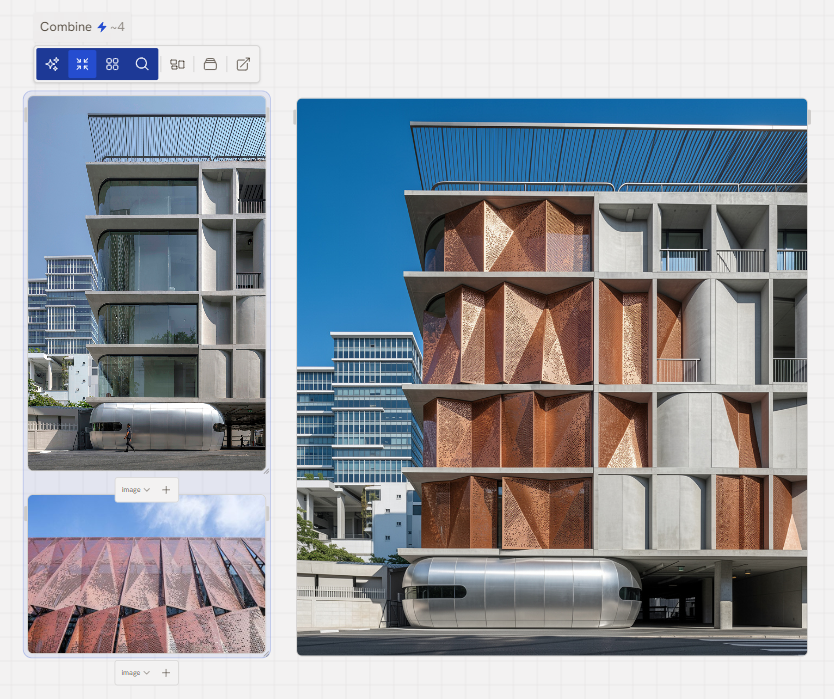
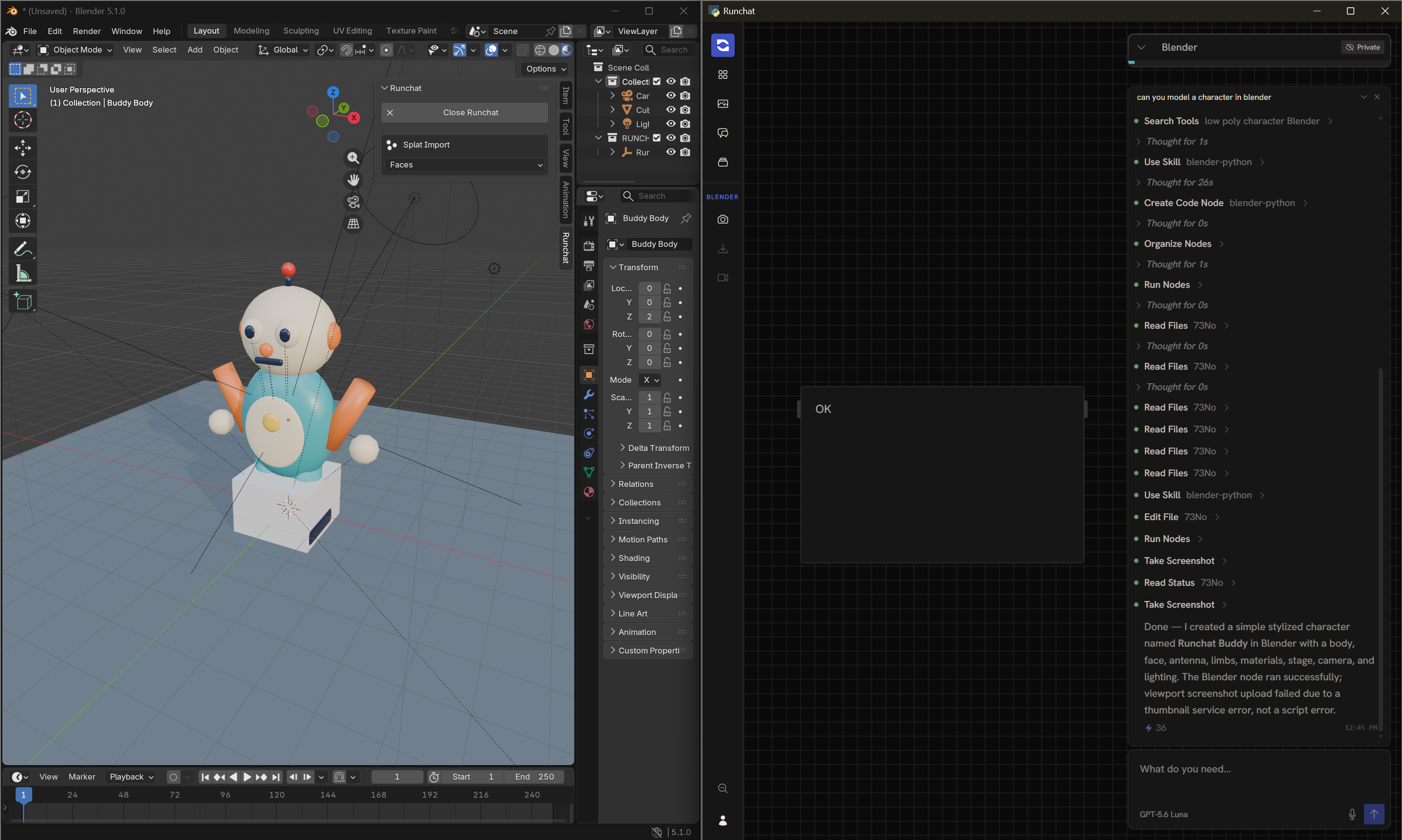
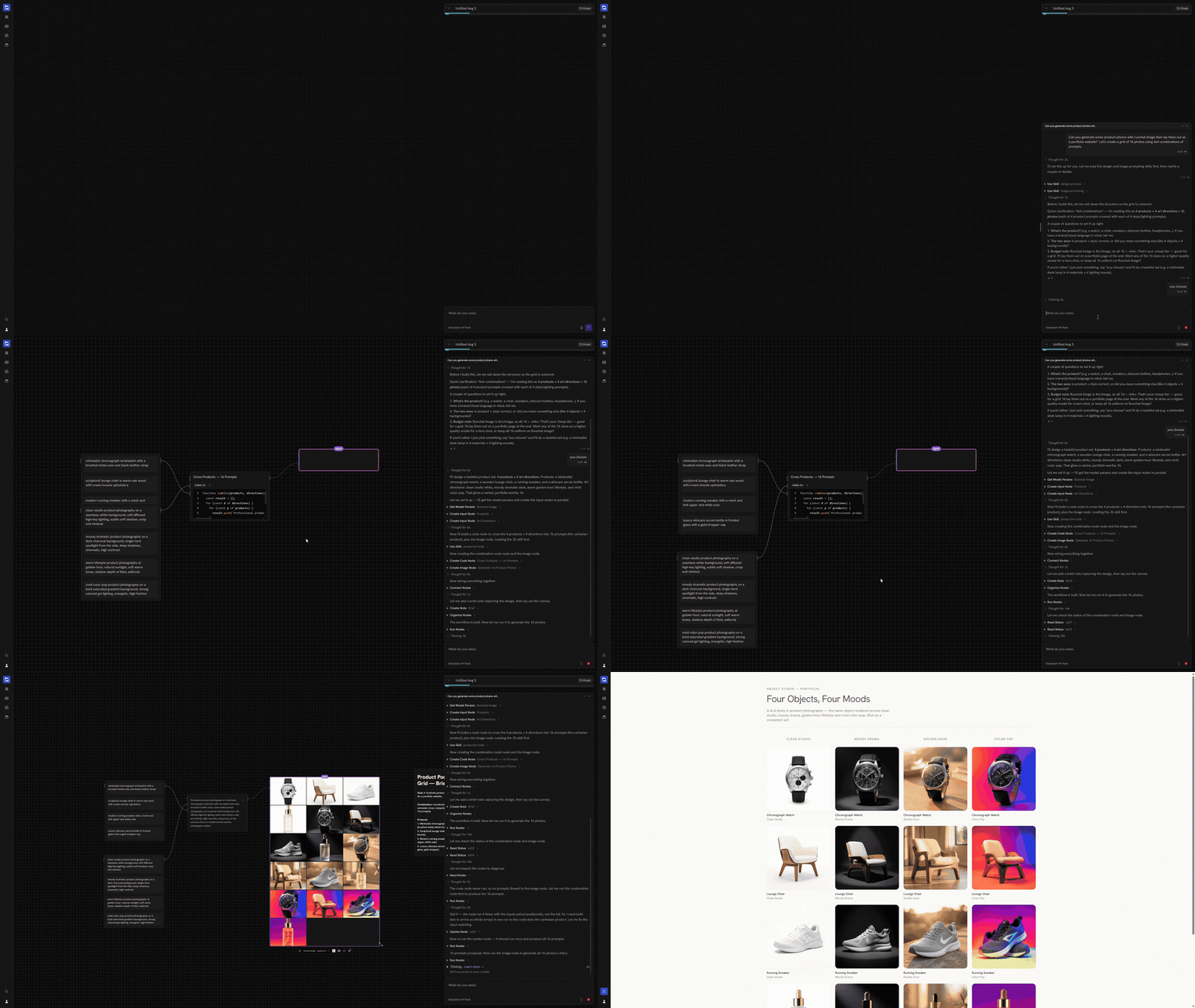
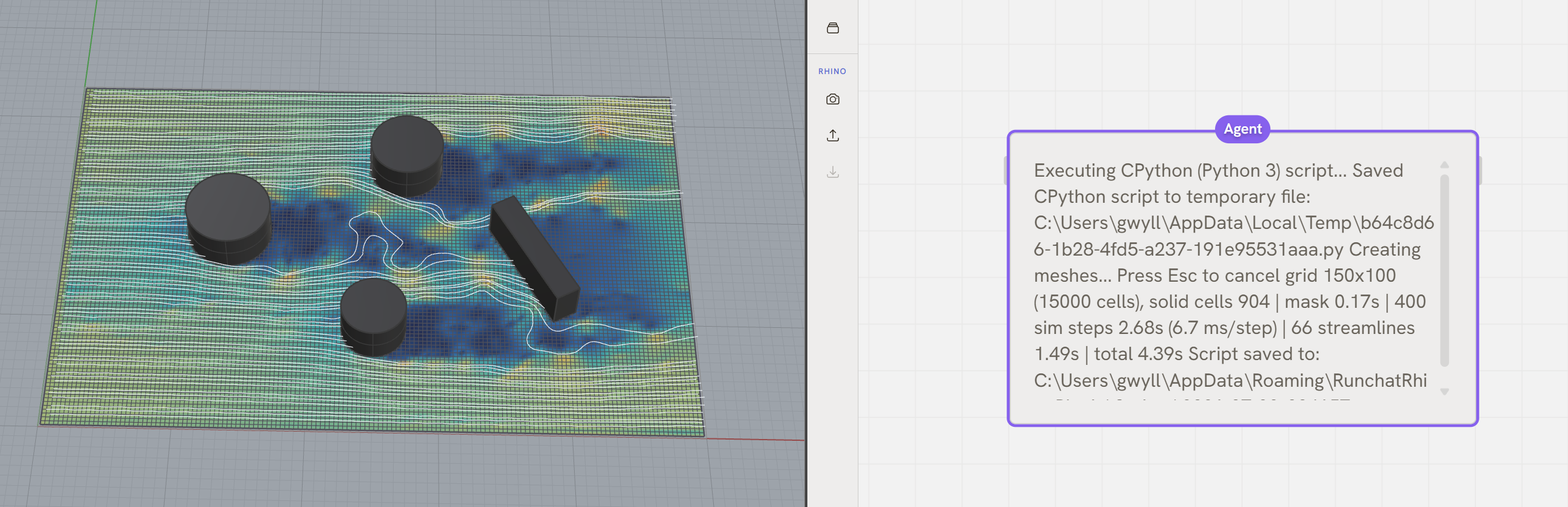
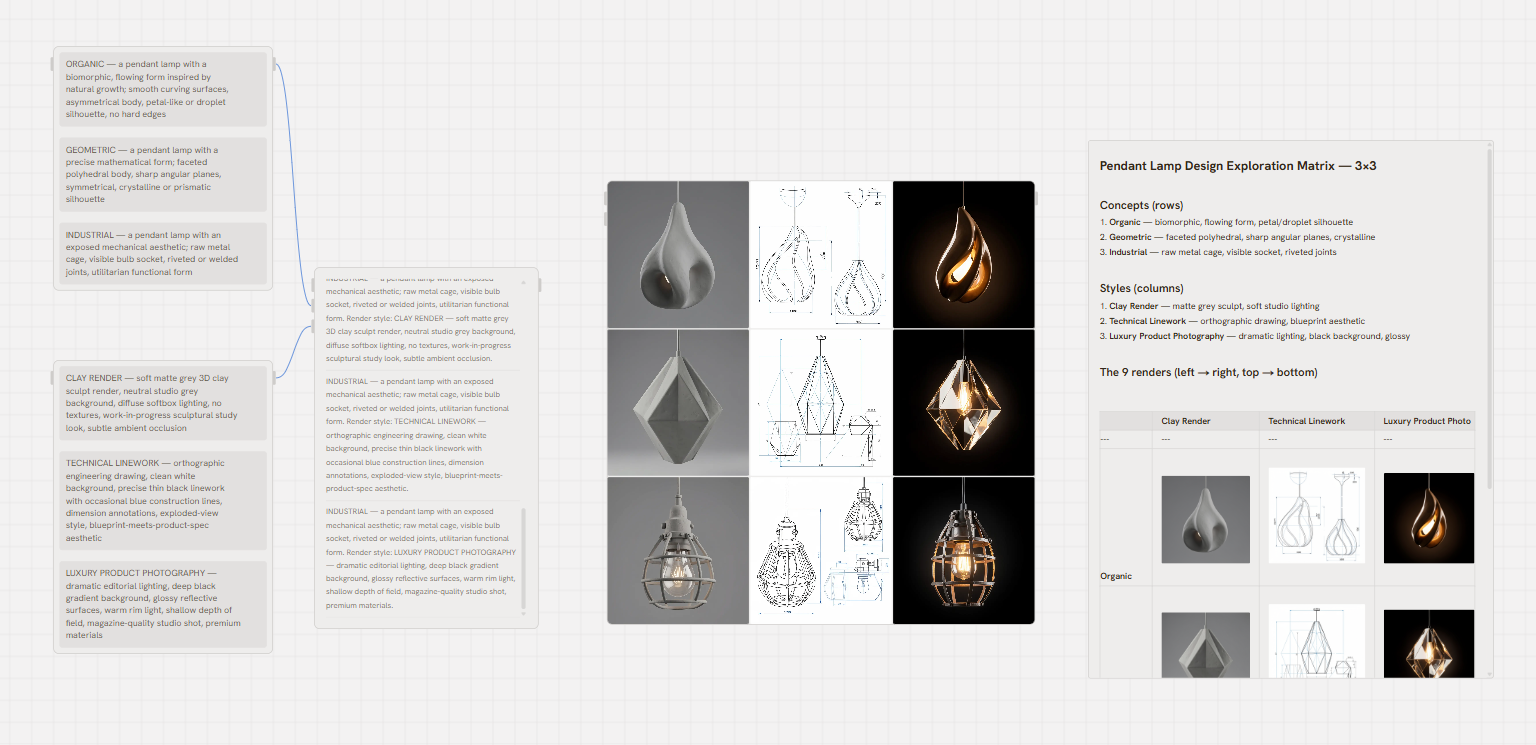
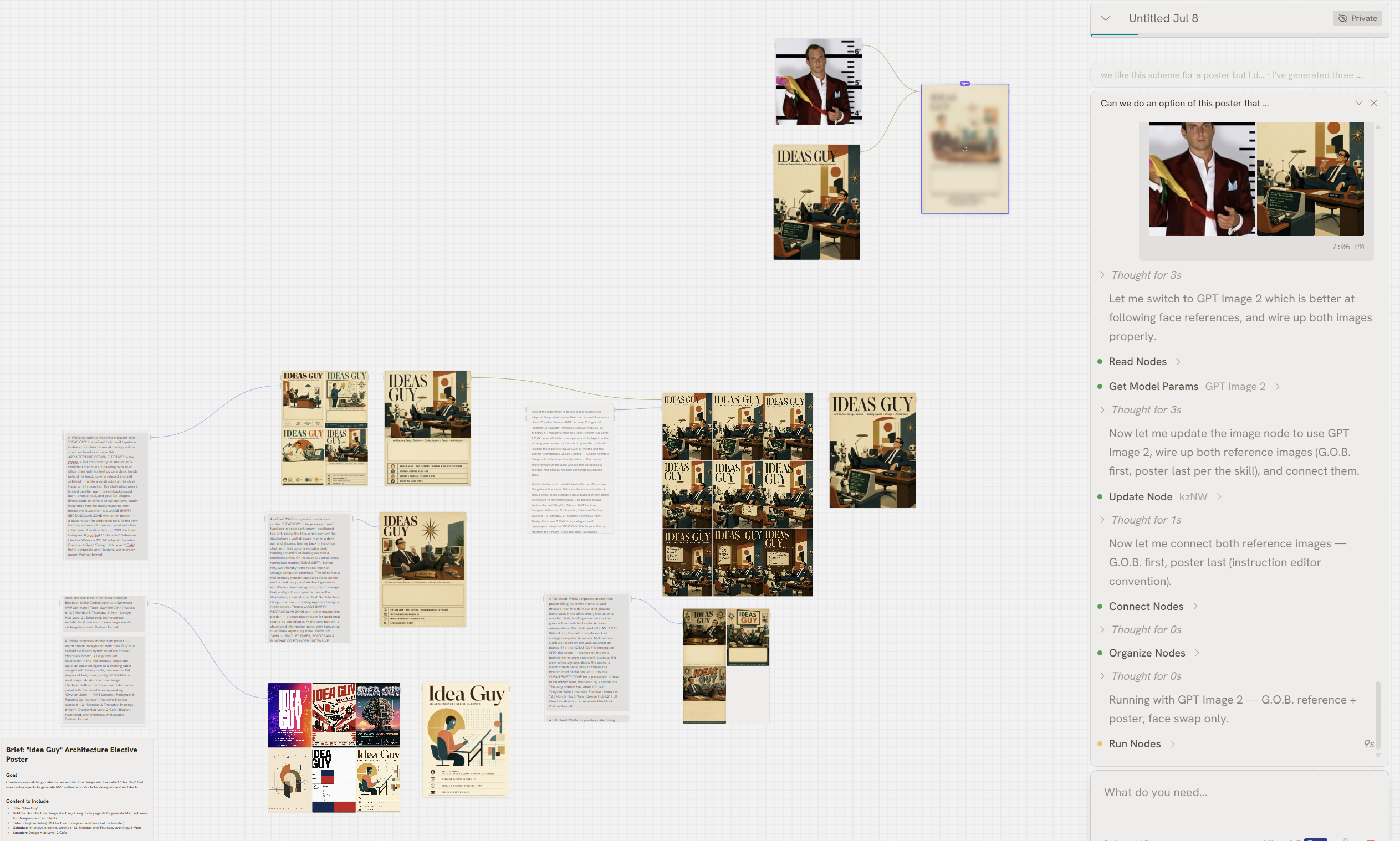
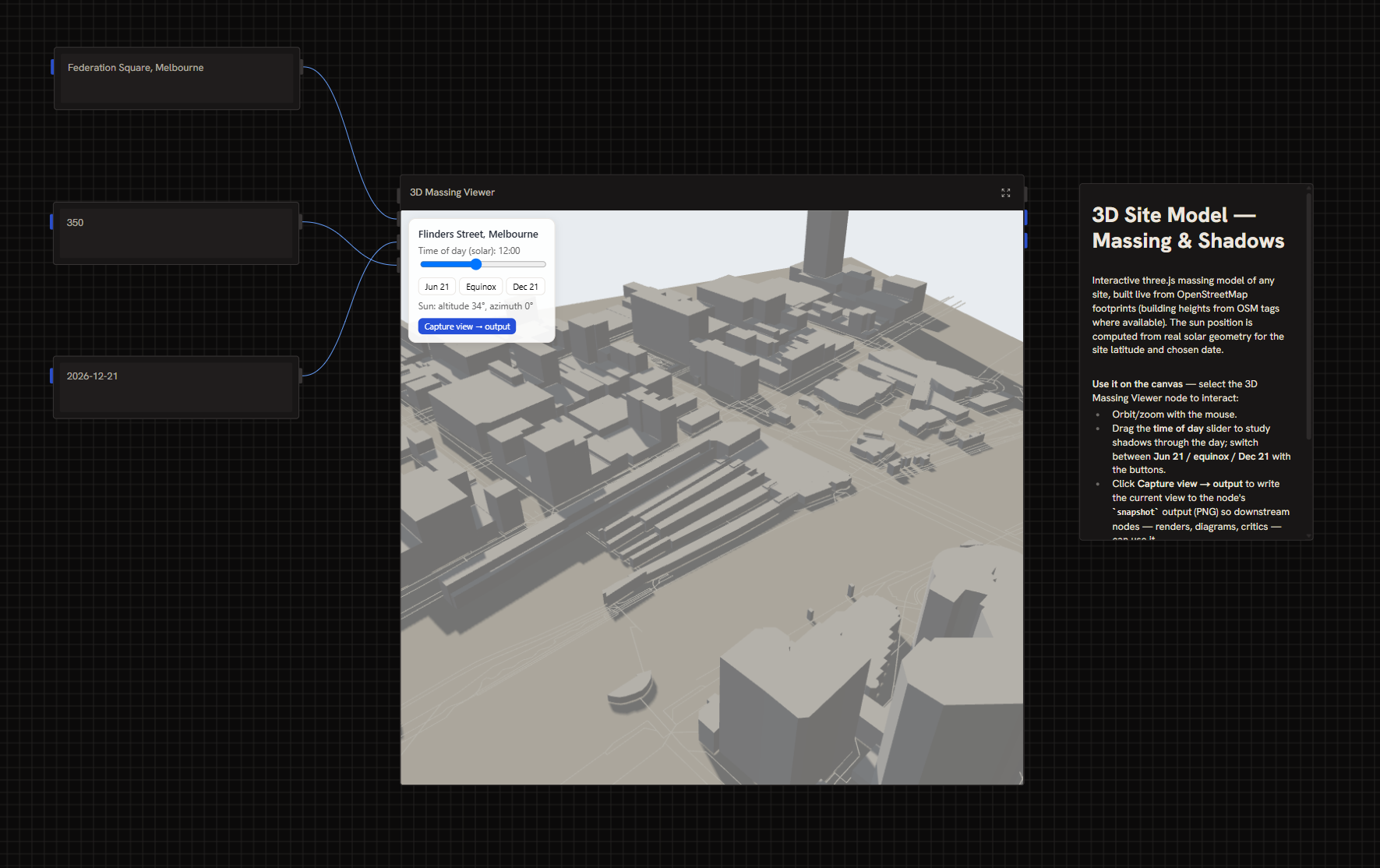
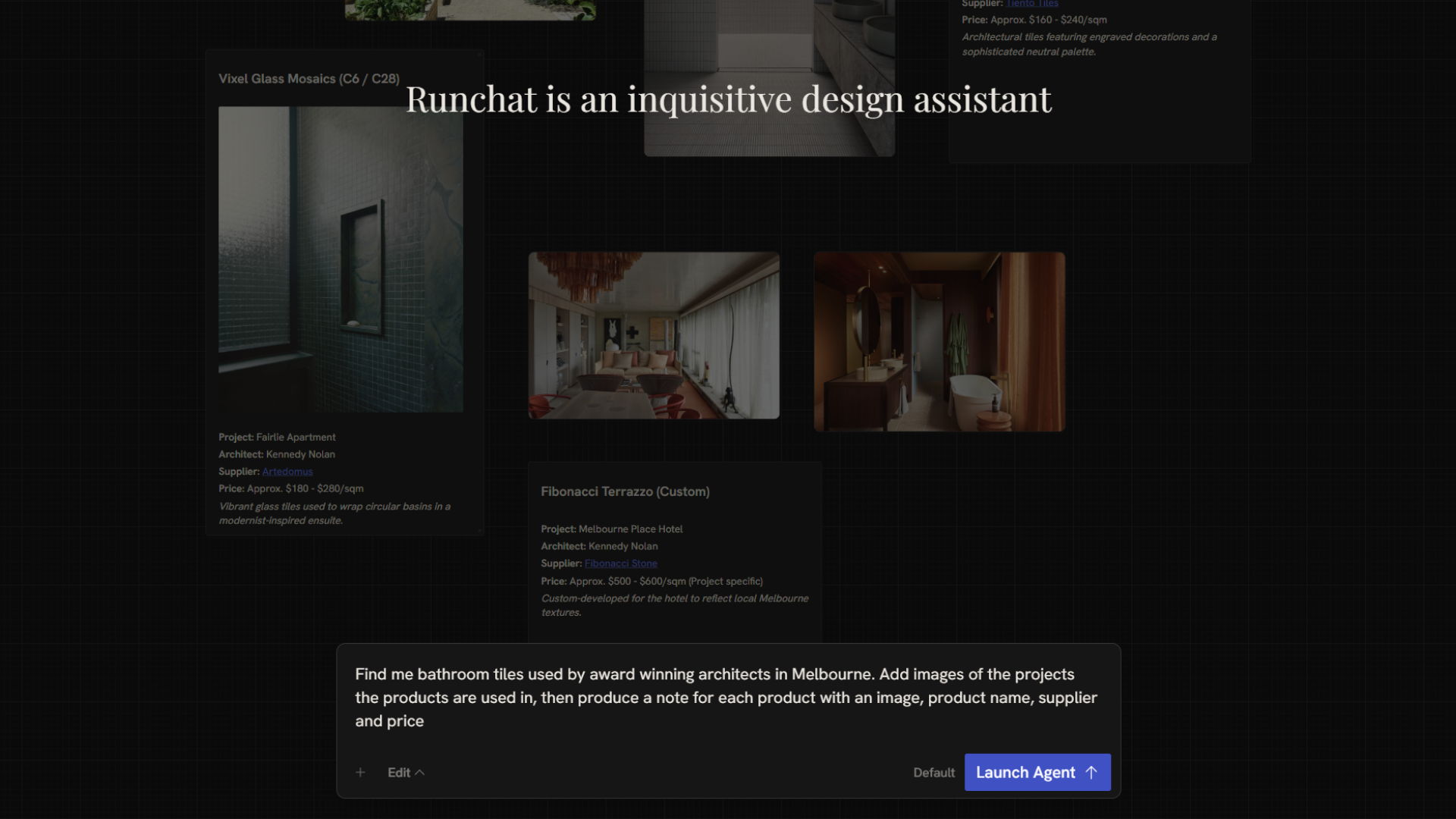
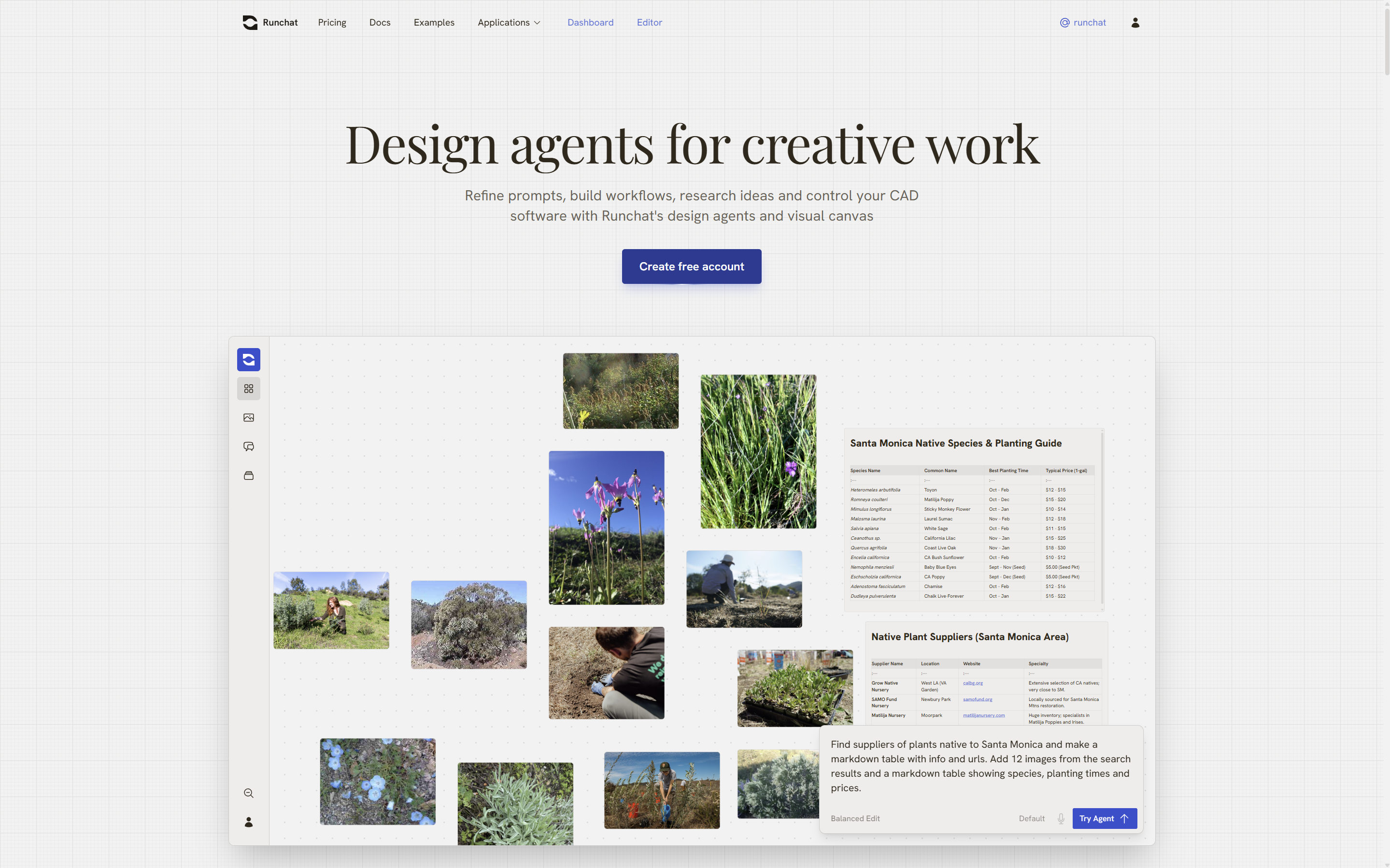
Frontier language models have crossed a threshold: according to METR, systems like Claude Mythos can now complete tasks requiring multiple days of continuous operation. This workshop investigates how to build design agents that run autonomously for hours across multiple software environments, and what role the human designer plays once they do. We will work in Runchat, a visual canvas for creating, running, and collaborating with autonomous agents for design. Runchat will be used to explore and build and custom harnesses : the context, tools, skills, memory, and sandboxes an agent uses to pursue a goal. The engineering decisions that go into the design of the harness determine what a language model can actually accomplish on a complex creative task far more than the task description alone. Participants will move from simple prompting through workflow composition to custom tool development, treating harness engineering as the new craft underpinning agentic design practice. This might also involve ecosystems of agents working across 3D modelling, 2D image-making, scripting and web research.
The workshop responds directly to the Humanism Recoded theme by foregrounding what remains intrinsically human in design. Long-running agents will likely automate substantial portions of knowledge work where success can be verified, and this includes many repetitive “boilerplate” design tasks. However, agents are fundamentally limited by their existence only within the context of their loop. They do not experience time, space, or embodiment; training on text and image tokens limits their spatial reasoning; and crucially, they do not set their own goals or develop taste, judgement, or a stake in changing the world. We will therefore investigate models for collaborating with autonomous agents in design processes. How should we develop design goals and rewards that can balance precise task specification against the productive ambiguity that open-ended design requires?
Across the workshop we will also examine the relationship between time, cost, and utility: how to compose low-cost and high-intelligence models effectively, how skill and memory systems extend an agent’s reach, and where human-in-the-loop checkpoints add the most value. Workshop outcomes will consist of a collection of design artifacts (3D models, renderings, websites, and other outputs) produced by participants’ agents and a set of short videos documenting each agent in operation. These videos will provide insights into the design process of developing the harness, the unexpected successes and failures and the possible immediate applications and utility for practitioners and creatives.
Workshop Schedule
Day 1 – Visual Canvas and Workflows
Time: 9:00 am – 1:00 pm
- Generative models
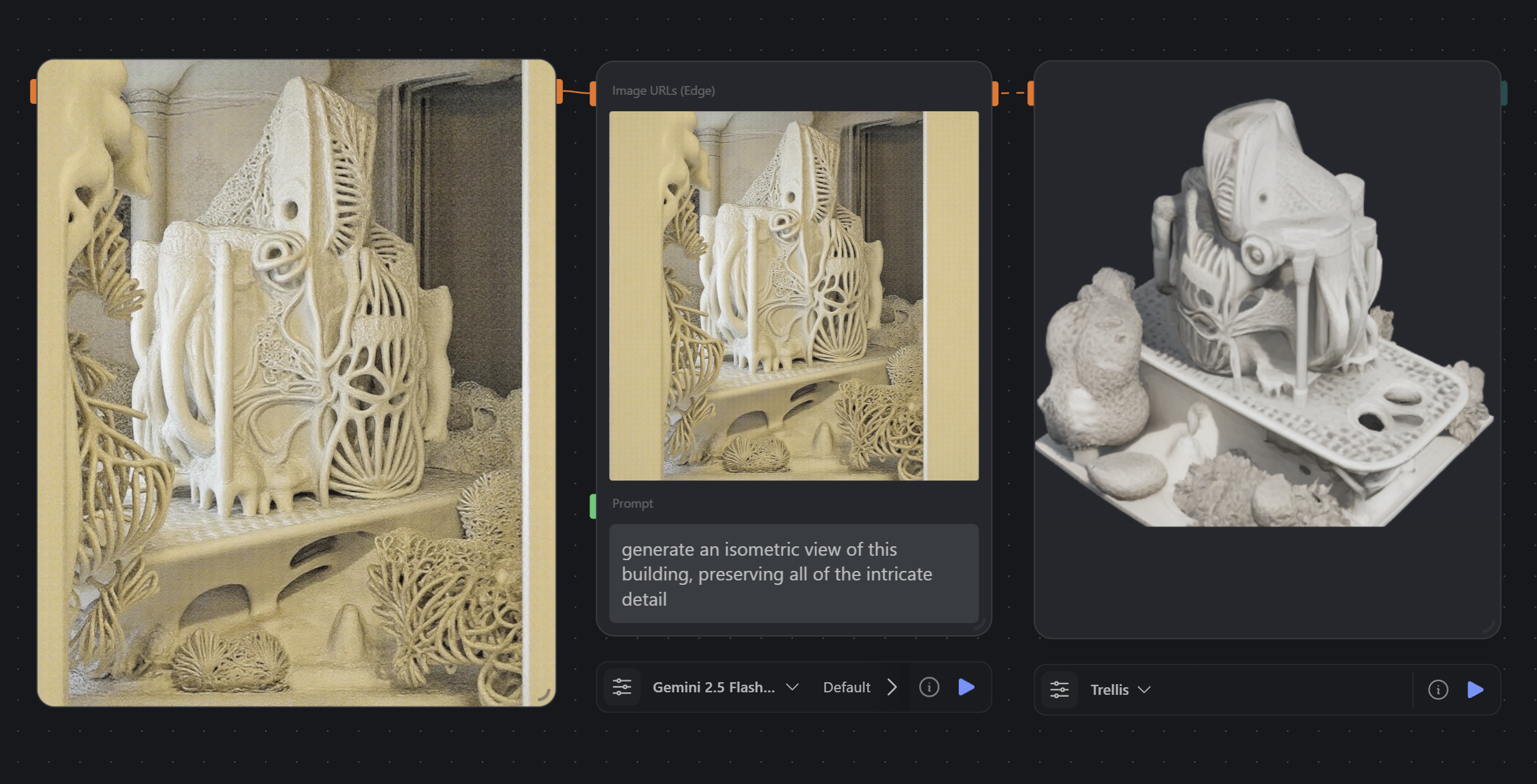
- Workflow creation
- CAD integrations
- Scripting and UI
Day 2 – Design Agents and Harnesses
Time: 9:00 am – 1:00 pm
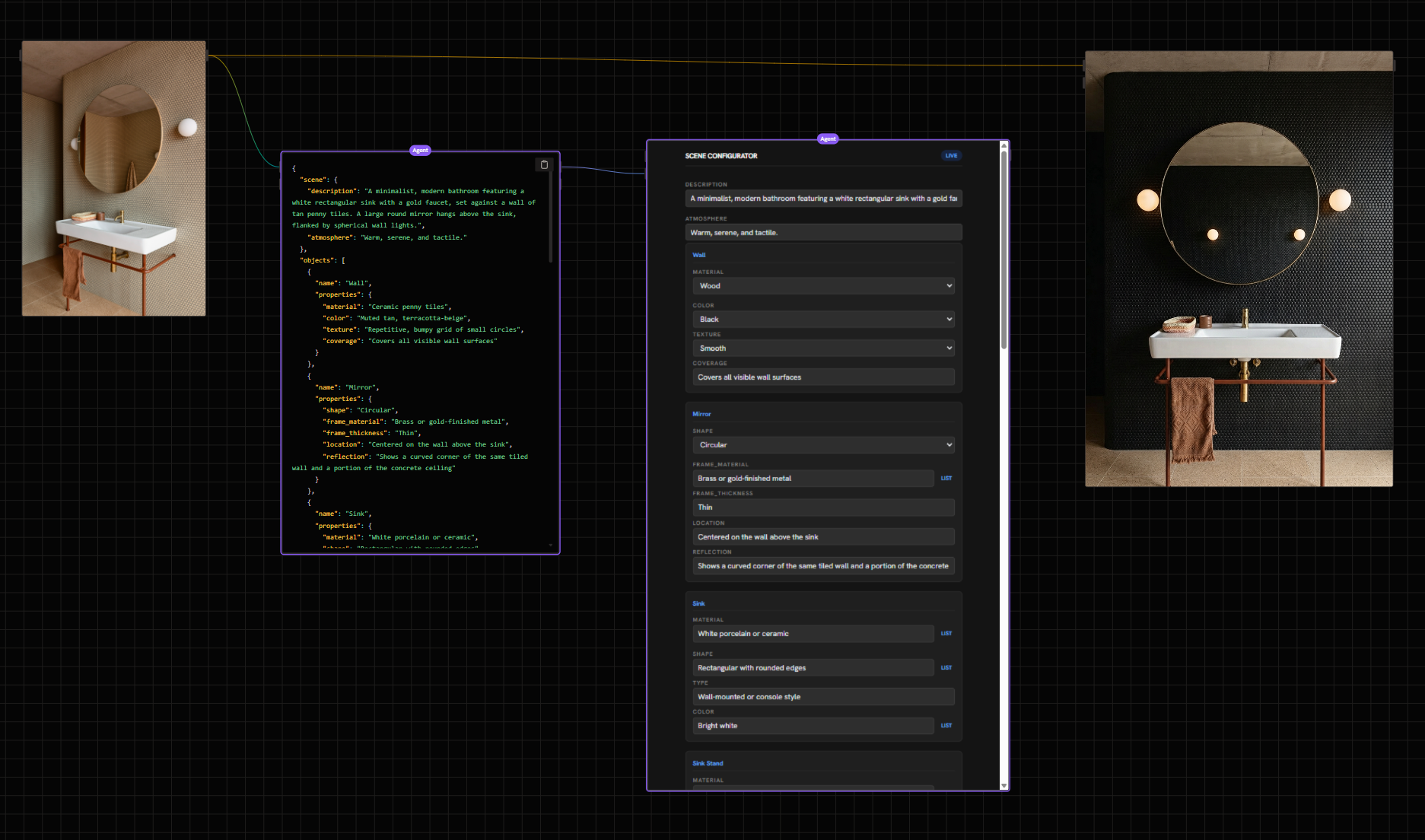
- Vision models
- Web grounding
- Tool development
- Skill development
Day 3 – Agent Ecosystems
Time: 9:00 am – 1:00 pm
- Multi-agent systems (tasks and subagents)
- Memory systems
- Hooks and triggers
Total Workshop Time: ~12 hours over 3 half-days
Participant Information
- Audience: Students, researchers, and professionals in architecture, design, and AI
- Skill Level: Intermediate. Prior knowledge of Rhino/Grasshopper is helpful but not required
- Group Size: ~25 participants
- Hardware: laptop capable of running Rhino 7 or Rhino 8 with Grasshopper
Workshop Gallery
Refund and Change Policy
Important: Refund and change requests will not be accepted beyond Monday, October 5th.