Procedural Robot Control: Animating Human-Machine Interaction
Workshop Dates: 10/19 - 10/21
Location: LTU, Southfield Address: 21000 West 10 Mile Road, Southfield, MI 48075
Workshop Team
Luis Arturo Pacheco, Florida Atlantic University, animaquina, instagram
Milad Gholamifard, Florida Atlantic University
Registration: Regular - $325, Student - $165
Registration
Workshop Description
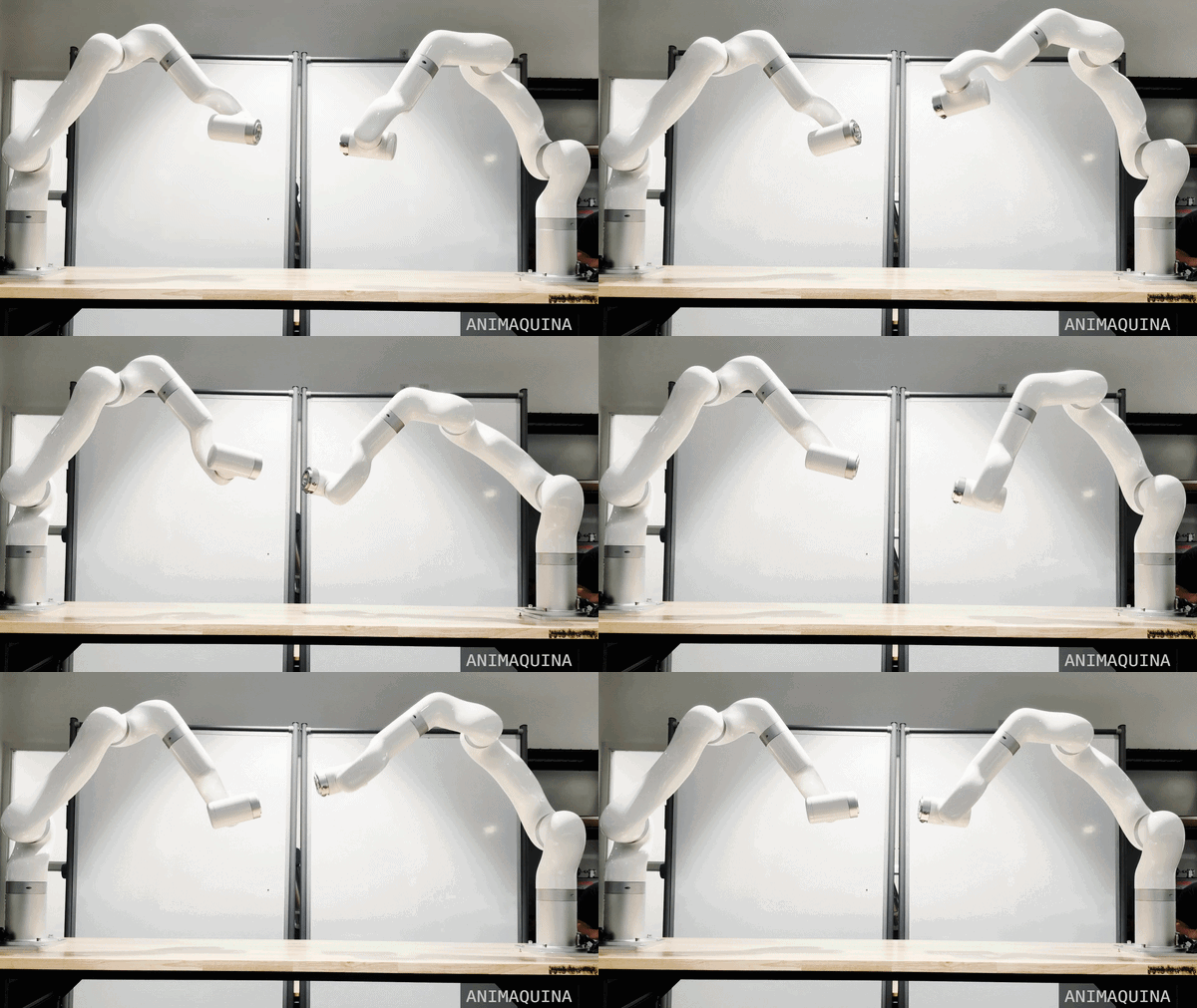
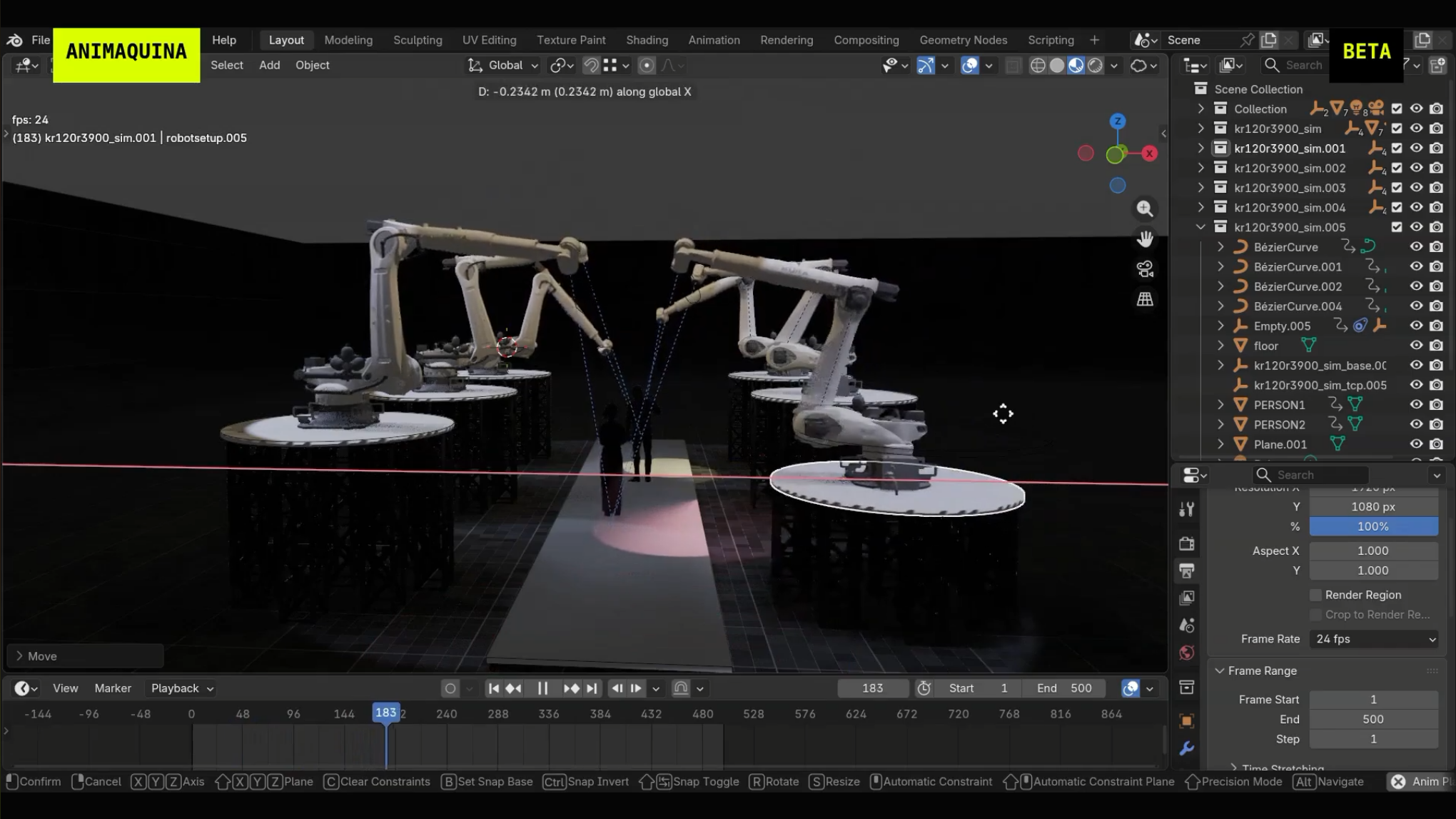
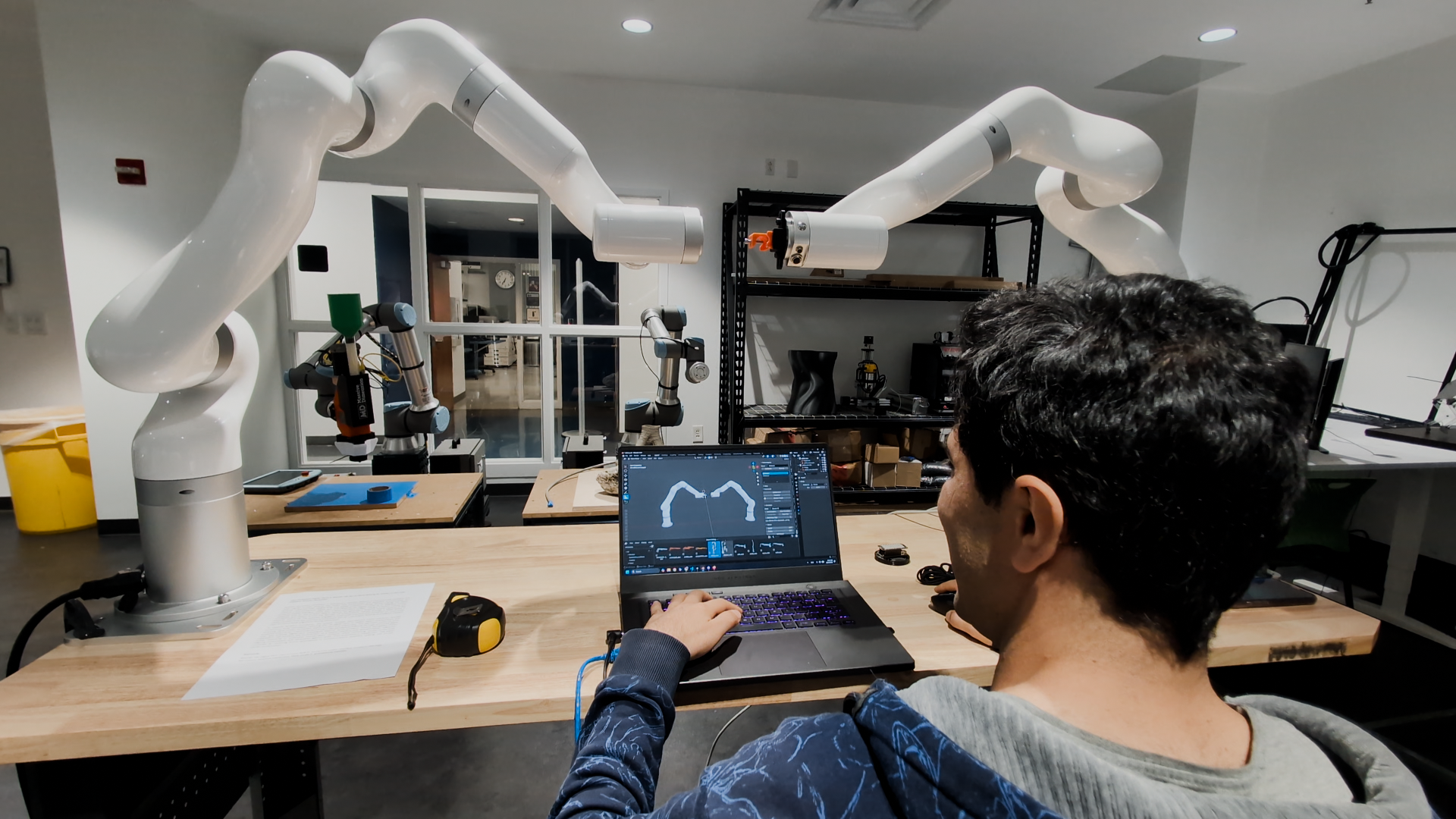
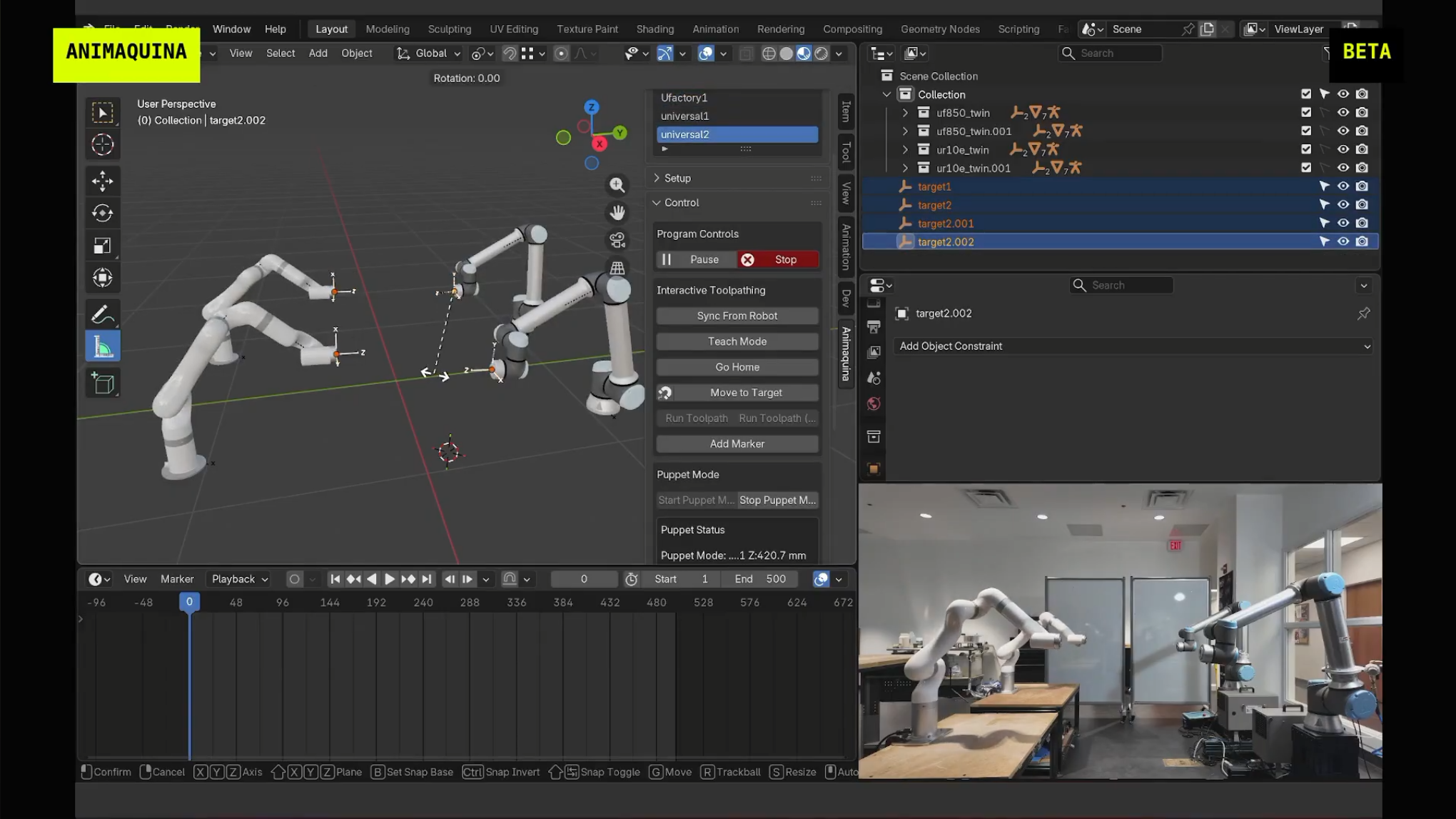
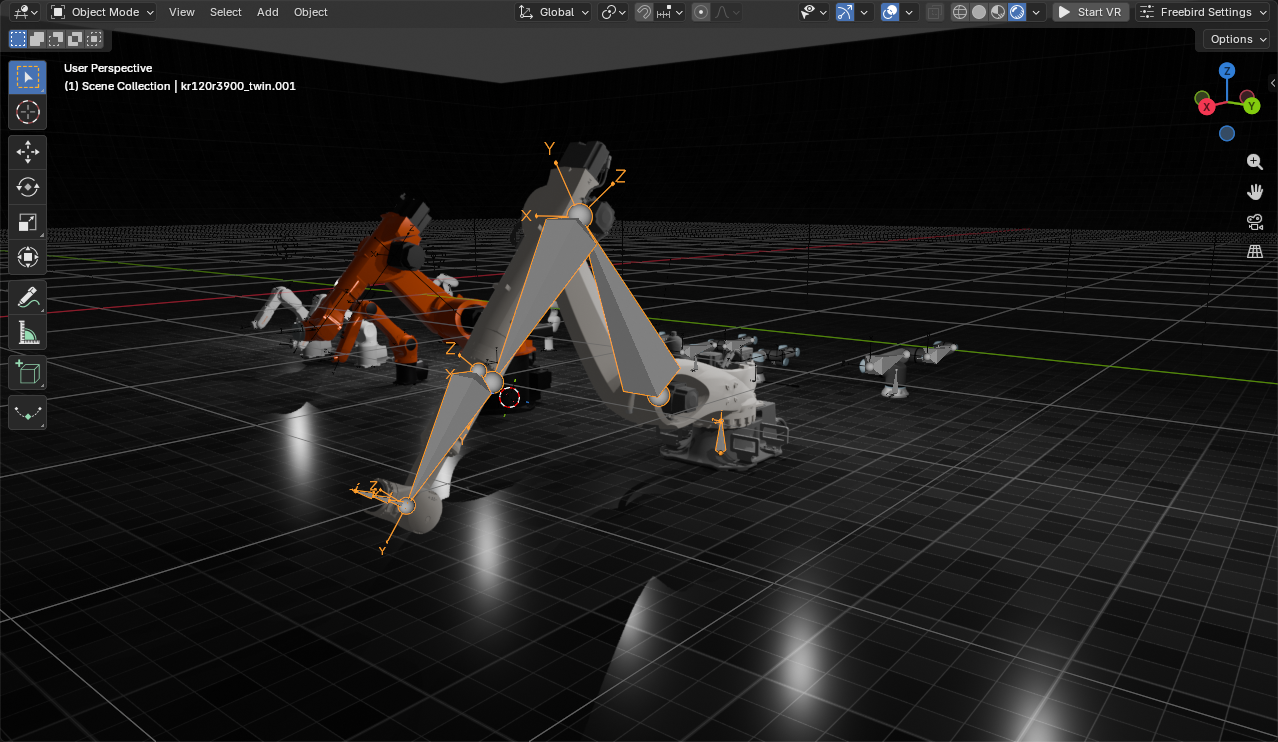
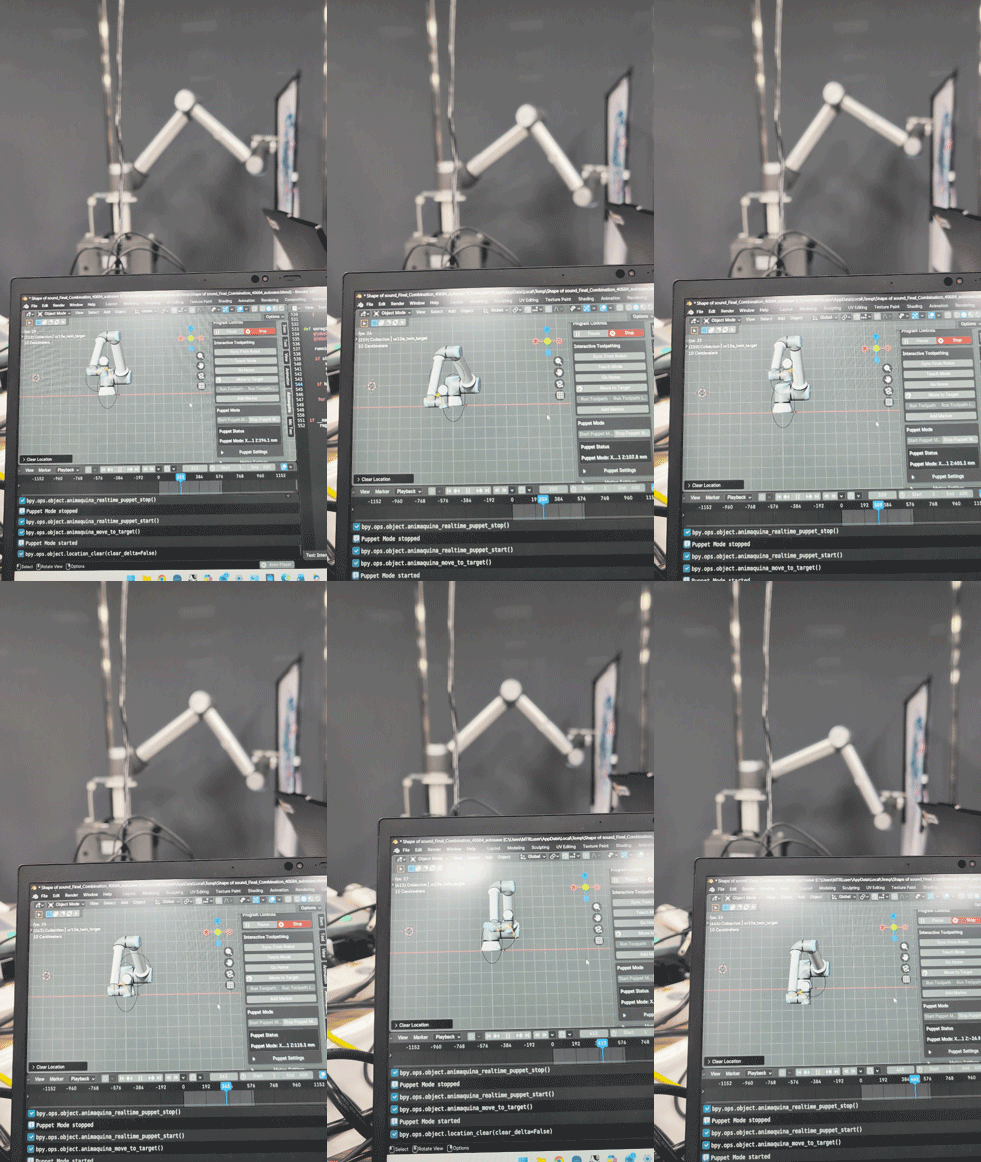
This workshop explores procedural animation as a framework for robotic control and human-machine interaction. Rather than treating robots as systems driven exclusively through fixed trajectories, code-heavy programming, or isolated industrial workflows, participants will develop robotic behaviors through animation logic, procedural systems, spatial interaction, and real-time feedback. Framed within the ACADIA 2026 theme Humanism Recoded, the workshop investigates how computational design workflows can become more embodied, expressive, and human-centered through animation-based approaches to robotics. The workshop positions procedural animation as an interaction paradigm capable of shaping robotic behavior, fabrication processes, and collaborative human-machine workflows. Using Blender and Animaquina, participants will author robotic motion through keyframes, constraints, procedural systems, Geometry Nodes, and live interaction techniques commonly associated with animation, game development, and digital art. Participants will explore how robots can respond to human input, environmental conditions, and procedural behaviors in ways that move beyond traditional offline robotic programming. The workshop emphasizes accessibility and inclusivity by lowering technical barriers traditionally associated with robotic systems. By leveraging spatial and visual workflows, the workshop enables architects, artists, designers, and researchers to engage robotics as a medium for embodied interaction, creative expression, and adaptive fabrication. Participants will develop experimental robotic behaviors, interactive toolpaths, and procedural fabrication workflows through a series of guided exercises and collaborative projects.
Participants willl learn: Understand procedural animation as a framework for robot control. Learn how animation concepts such as constraints, drivers, keyframes, and procedural systems can generate robotic behaviors. Explore human-machine interaction through spatial and embodied interfaces. Develop interactive robotic workflows using Blender and Animaquina. Investigate real-time and sensor-driven robotic interactions.
By the end of the workshop, participants will produce:
Experimental robotic motion studies Interactive procedural toolpaths Human-machine interaction prototypes Sensor-driven robotic behaviors Documentation suitable for exhibition, publication, or future
Workshop Schedule
Day 1 – Foundations of Procedural Robot Control
Time: 10:00 am – 5:00 pm (w/ 1-hour break) Morning
- Introduction and conceptual framing
- Blender animation fundamentals
- Digital twins and robot interaction environments
Afternoon
- Constraints, drivers, and behavioral motion
- Interactive toolpath workflows
- Real-time robot communication
- Initial robotic experiments
Day 2 – Human-Machine Interaction and Behavioral Systems
Time: 10:00 am – 5:00 pm (w/ 1-hour break) Morning
- Human-in-the-loop robotic interaction
- Sensor-driven behaviors
- Live robotic demonstrations
Afternoon
- Final project brainstorm and prototyping
- Development of participant projects
Day 3 – Final Projects
Time: 10:00 am – 5:00 pm (w/ 1-hour break)
- Final project development
- Documentation and presentations
- Public demonstrations and discussion
Total Workshop Time: 18~20 hours over 3 days
Participant Information
- Audience: Students, researchers, and professionals in architecture, design, and digital fabrication
- Skill Level: Participants are expected to watch introductory Blender tutorials that will be provided by the instructors before the workshop. No prior robotics experience is required. Basic familiarity with 3D modeling, animation workflows, or computational design tools is helpful but not necessary.
- Group Size: ~15 participants
- Hardware: laptop capable of running Blender
Workshop Gallery
Refund and Change Policy
Important: Refund and change requests will not be accepted beyond Monday, October 5th.